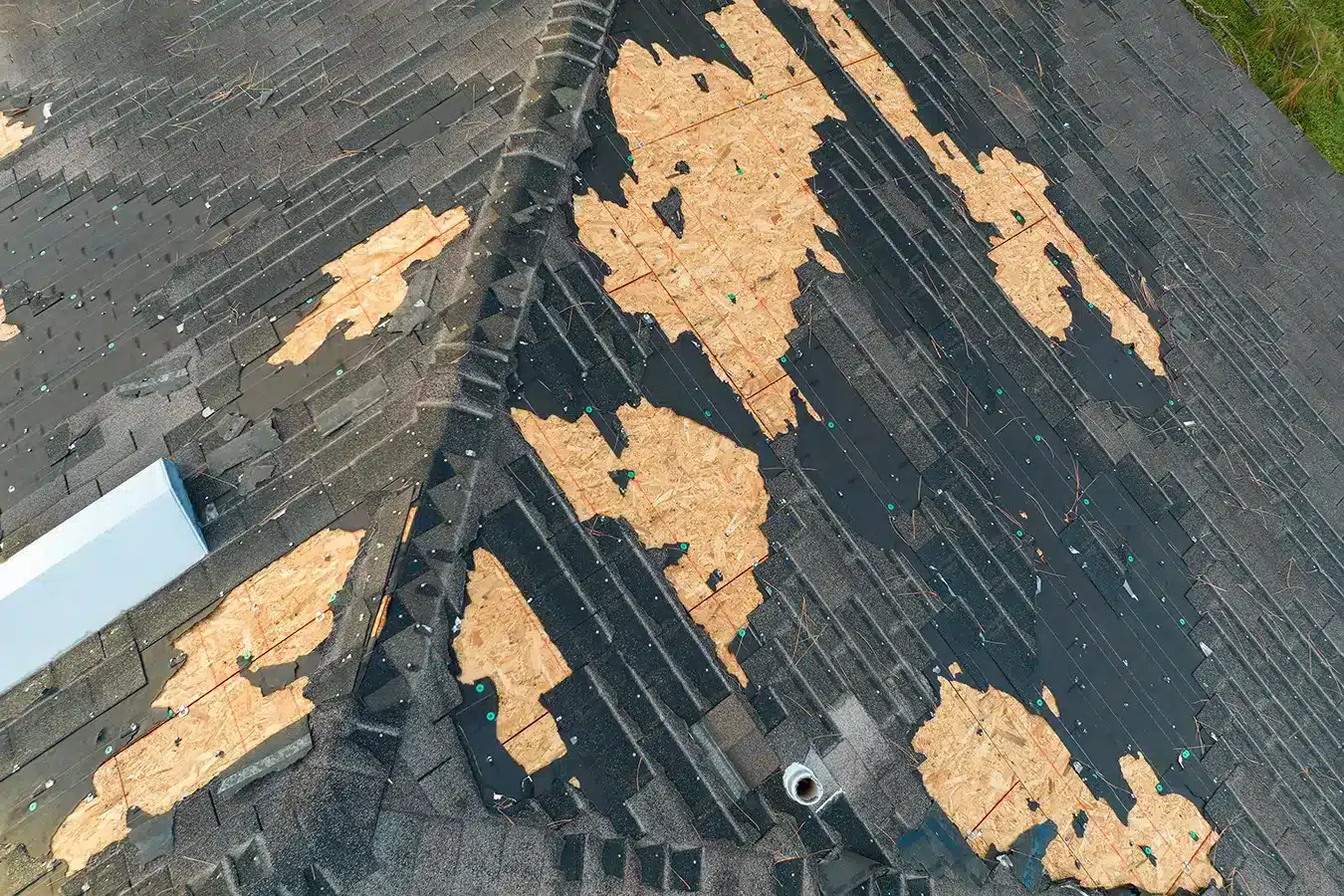
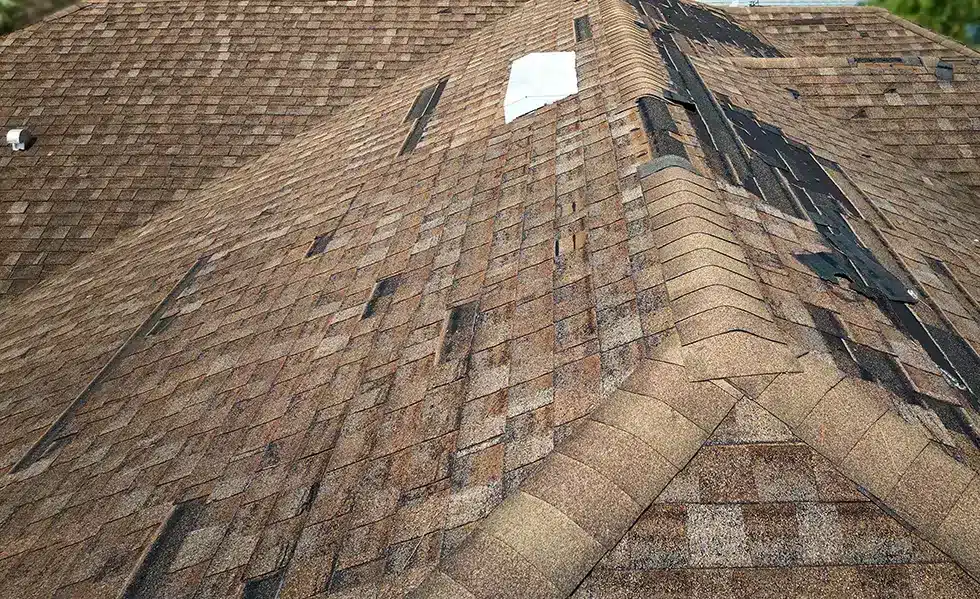
After a hailstorm, shingles may show circular dents, cracked surfaces, or dark bruised spots where granules have been knocked loose. This damage compromises the waterproof seal and UV protection — and Texas hail often leaves damage invisible from the ground without a trained eye.
Texas straight-line winds and storm gusts peel back shingle edges, break adhesive seals, and rip entire tabs away. Once lifted, shingles crease permanently and never reseal flat — leaving your underlayment and decking exposed to the next round of severe weather.
Flashing around chimneys, vents, skylights, and valleys takes a beating from Texas temperature extremes. Metal expands and contracts with 60°F+ daily swings, cracking sealant and pulling flashing away from surfaces — creating direct channels for storm-driven rain.
Granules are your shingles' armor against UV rays and hail. When gutters fill with coarse, sandy debris, that protective layer is failing. Texas sun accelerates this dramatically — shingles losing granules here degrade faster than in any northern climate.
Texas attics regularly exceed 150°F in summer, baking underlayment and decking from below while the sun attacks from above. Check for warped sheathing, moisture stains, mold growth, or visible daylight — all indicators your roof system is failing from the inside out.
Texas leads the nation in damaging hailstorms
80+ MPH gusts shear shingles and snap fascia
Year-round sun degrades materials 2x faster
Attic temps exceed 150°F, baking decking daily
60°F shifts in 24 hours crack seals and joints
Hail cores and rotation stress entire structures